

Mitsubishi has confirmed the Pajero will return to Australian showrooms before the end of 2026, reviving a badge that has been absent locally since the fourth-generation model bowed out in 2021.
But while the name is familiar, the vehicle underneath will be very different to the Pajero it’s stepping in for.
The new Pajero ditches the monocoque construction of its predecessor – a controversial change in the early 2000s – in favour of a more traditional ladder-frame architecture.
READ MORE: Full details of the previous Mitsubishi Pajero: NM, NP, NS, NT
SUBSCRIBE NOW! Click here to have our free newsletter delivered to your inbox
It’ll be the same platform that underpins the latest Triton ute, marking a return to the separate-chassis formula of the original – and potentially dragging the Pajero closer in spirit to the previous Pajero Sport.
The new Pajero – which the brand refers to as a cross-country SUV – will be Mitsubishi’s new flagship, effectively replacing that discontinued Pajero Sport and squaring up against the Toyota Prado, Ford Everest and Isuzu MU-X in one of the country’s most fiercely contested segments.
It’s a segment that appeals to a broad range of buyers, from families and adventurers to those who need to tow heavy loads and head off on the big trip.
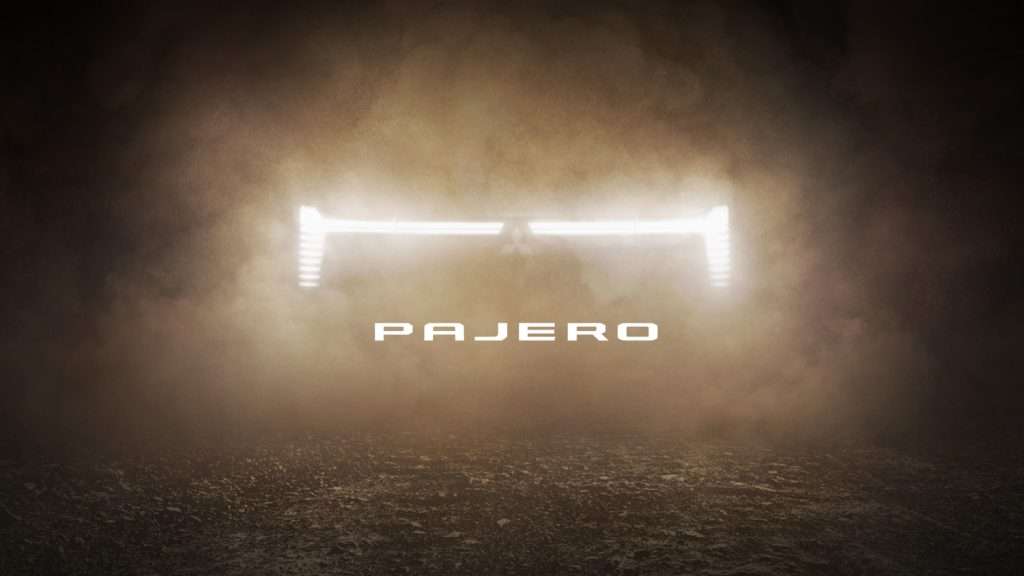
At the top of this article we’ve turned to AI and some recently-released teaser images to give an idea of how the new Pajero could look when it’s revealed within months.
New Pajero to lean on heritage
The Pajero name carries serious weight Down Under.
First seen here in 1983, the boxy original shook up the 4WD market with a then-rare blend of genuine off-road ability and everyday comfort.
It’s also got history on rally roads around the world.
The Pajero went on to claim a record 12 Dakar Rally victories while more than 3.2 million Pajeros have been sold across 170 countries.
In many overseas markets the vehicle is sold as the Montero, a name Mitsubishi has confirmed will continue in some regions for the new model.
In 2000 for the third generation car the Pajero shifted to a more car-like monocoque body with independent suspension front and rear.
The move shifted the off-road/on-road balance more towards the on-road side of the ledger.
Yet the Pajero maintained its ability to venture where many SUVs couldn’t, while also bringing dynamic advantages on rough outback tracks.
But the new model winds that back with the decision to utilise ute-based bones; given the advances made in making separate chassis vehicles drive well it could be a solid move, and one that gives the rough road faithful confidence the new Pajero will have the muscle to match it with the class best.
All-new Pajero built on Triton underpinnings
Mitsubishi has confirmed the new Pajero rides on the ladder-frame chassis of the latest Triton and will be built alongside the ute in Thailand.
The company says the cabin and the front and rear suspension have been developed specifically for the Pajero, separating it from its workhorse sibling.
As with rival SUVs based on ute underpinnings, expect coil springs at the rear in place of the Triton’s leaf setup.
Many details are yet to be announced, including powertrains.
But the smart money is on a version of the Triton’s 2.4-litre bi-turbo four-cylinder diesel, which produces 150kW and 470Nm in Australian trim, with reports out of Japan suggesting an eight-speed automatic is under consideration.
Mitsubishi’s Super Select II full-time four-wheel drive system – which allows on-road operation in four-wheel drive – is the likely pick for drive duties.
Australian government approval documents point to four model grades – GLX, GLS, Exceed and GSR – reviving trim names familiar to previous Pajero owners.
Mitsubishi has also teased the return of the Pajero’s iconic triple multi meter, reimagined as a digital display.
New Pajero to leverage technology
The new Pajero won’t just be tougher underneath – it’ll also be far more digital inside.
Mitsubishi has already teased a modern interpretation of one of the Pajero’s most recognisable interior features: the triple multi-meter.
Once a bank of analogue gauges displaying altitude, barometric pressure and compass, the iconic display looks set to return as a configurable digital screen integrated into the dashboard.

Expect it to offer a much broader range of off-road information, potentially including steering angle, drivetrain status, differential lock operation, wheel articulation, pitch and roll angles, tyre pressures and navigation data.
Combined with a fully digital instrument cluster and large central infotainment display, the new Pajero is shaping up to be the most technologically advanced off-roader Mitsubishi has produced.
While final specifications remain under wraps, buyers can also expect the latest generation of Mitsubishi’s driver assistance and connectivity systems, bringing the Pajero into line with rivals such as the Toyota Prado and Ford Everest while preserving its focus as a serious touring vehicle.
Hybrid and electric plans in Pajero future
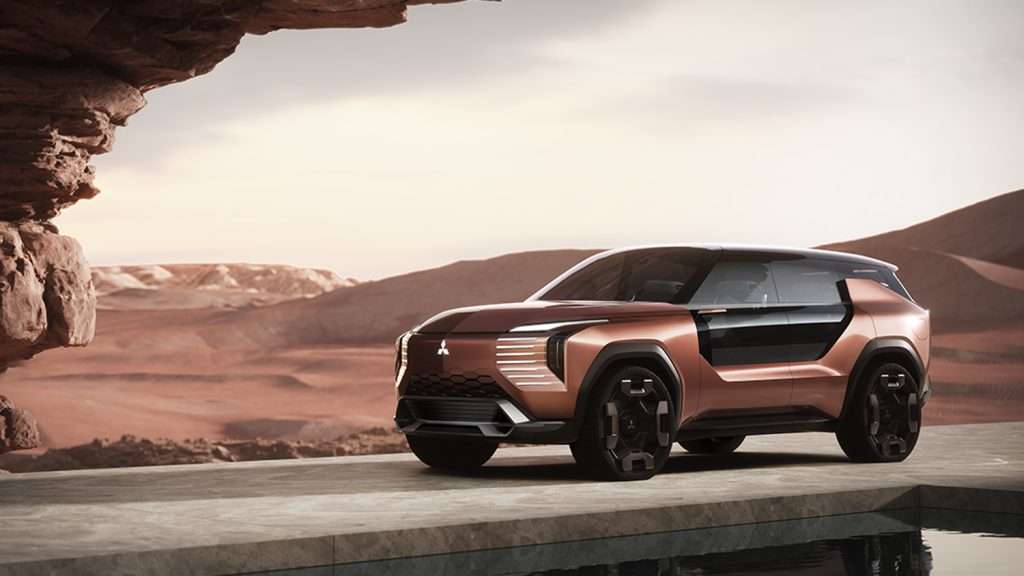
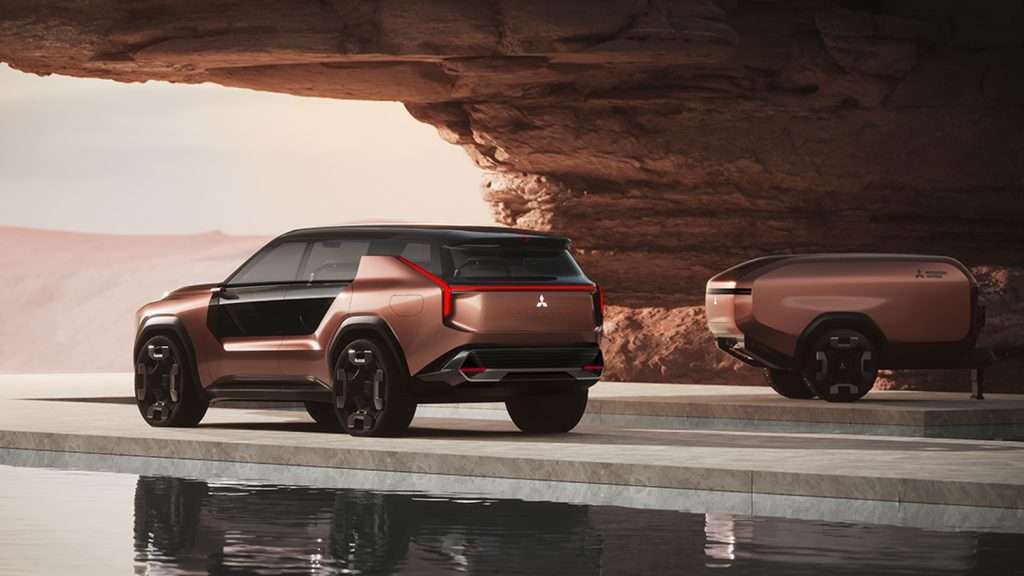
Diesel is expected to lead the Pajero return, but electrification is firmly on the agenda – as showcased by the Elevance concept car unveiled in 2025.
OK, so the Elevance is very futuristic and uses a quad motor battery electric system, but it’s indicative of what the brand is thinking long term.
Mitsubishi has also been developing a new-generation plug-in hybrid system for its ladder-frame vehicles, placing an electric motor between the engine and transmission to allow meaningful EV driving without sacrificing towing and off-road ability.
It also allows the hybrid system to utilise the dual-range transfer case, providing all-important torque multiplication for slow-speed technical driving.
Industry expectations are that the technology will eventually find its way into the Pajero, creating a rival for the growing wave of Chinese plug-in hybrid 4WDs.
Earlier Mitsubishi concepts previewing the Pajero’s return went further still, showcasing quad-motor electric drivetrains with around 100km of EV driving range.
Tightening CO2 emissions rules from 2027 as part of the New Vehicle Efficiency Standard (NVES) add extra incentive for Mitsubishi to electrify its biggest off-roader sooner rather than later.
When will the new Pajero arrive in Australia?
The new Pajero will make its global debut in the second half of 2026, with Mitsubishi Australia confirming local deliveries will begin before Christmas.
Australia won’t be the first market to get the new model, but it will be among the earliest – recognition of how important the nameplate is here.
Pricing has not been announced, though educated estimates suggest a starting point of somewhere around $60,000, clearly lining the Pajero up against the Ford Everest and Isuzu MU-X, with more expensive model grades likely to edge further north into Toyota Prado territory.
Camouflaged prototypes have already been spotted testing on Australian roads, with local development covering driver assistance systems and outback conditions.
Full specifications and pricing are expected closer to the on-sale date.
